
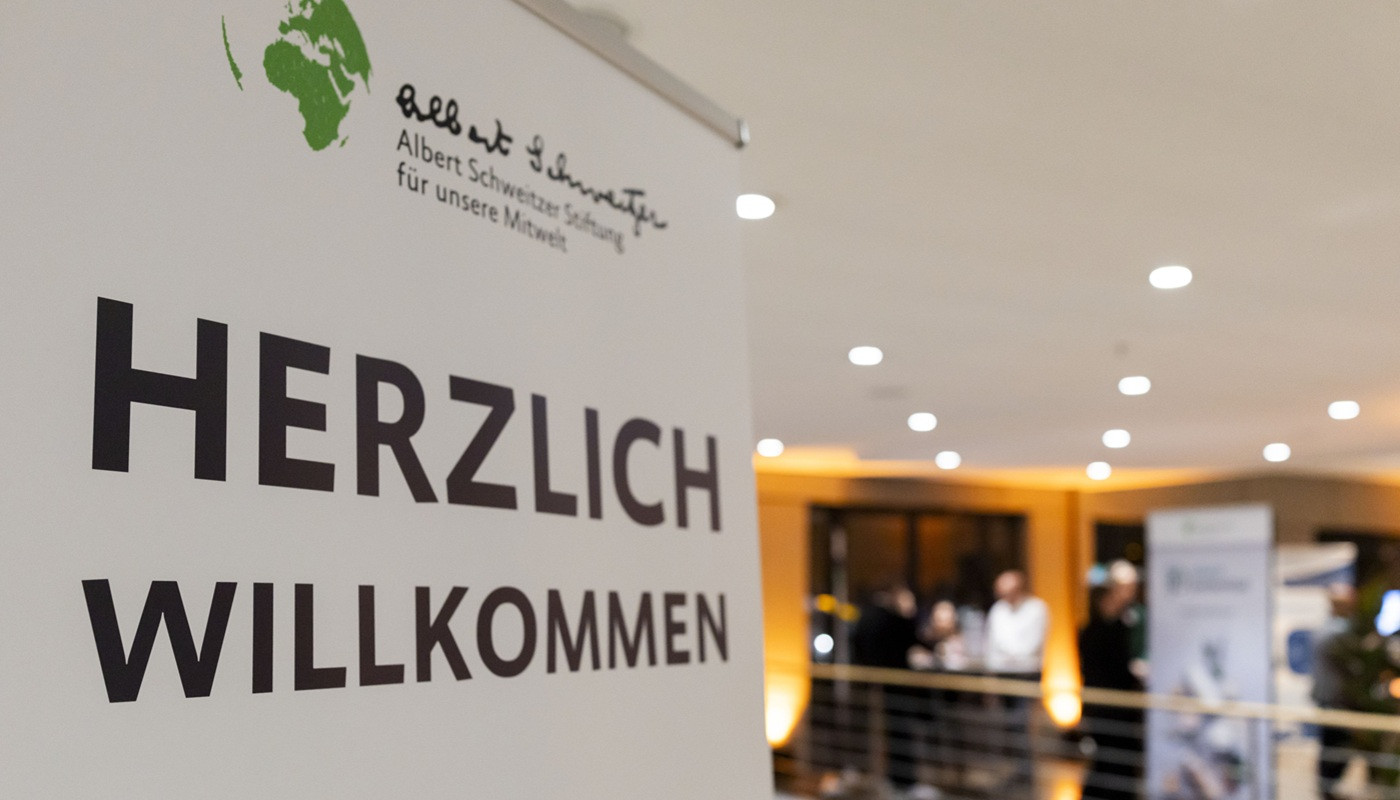
At this year's Round Table of the Albert Schweitzer Foundation, it became clear that the restructuring of animal husbandry in Germany has already begun. Around 65 representatives from the food industry, science and politics met at the dbb forum in Berlin to discuss ways to achieve a more animal-friendly future.
Round Table 2025: Dawn of a Historic Change
In previous years, the Round Table primarily served as a forum for discussion about the Broiler Initiative. In 2025 the focus shifted to the bigger picture: Better housing systems for all so-called farm animals in Germany.
Key findings:
- Haltungsform 1 and 2 have no future. Companies in the food industry are increasingly switching to higher animal welfare standards.
- Companies can make a big difference – the Broiler Initiative is a promising example. Clear goals, roadmaps and cooperation are helpful in this regard.
- Politicians must provide planning security. Financing, animal husbandry labeling and faster approvals are crucial for the transition.
»Only those who sit at the Round Table can make a difference.« – André Müller, Studierendenwerk Erlangen-Nürnberg
Promoting Animal Welfare Effectively
In his keynote speech, Prof. Dr. Achim Spiller (University of Göttingen) emphasized that animal welfare has become significantly more important in society – and is a central element of resilient food systems. He explained the reasons for the failure of the Borchert Commission and advocated a pragmatic approach: Gradual implementation, exchange, networking and genuine cooperation.
»My colleagues in the German Bundestag must recognise that maintaining and improving animal husbandry in Germany is truly a task for society as a whole.« – Dr. Franziska Kersten, MP (SPD)
Practical Experience: Progress Through Corporate Initiative
The panel discussion with Dr. Julia Adou (Aldi Süd), Theile Funke (Wiesenhof), Dr. Hinrich Snell (BMLEH) and Mahi Klosterhalfen (Albert Schweitzer Foundation) demonstrated that companies are actively driving change, but continue to encounter administrative hurdles. There was agreement on the importance of the upcoming German Animal Welfare Labeling Act as a significant opportunity for greater transparency and planning security.
»Of course, the animals must be well cared for. That is why we promote Haltungsform 3, because we can see from the various animal health KPIs we have in the company that the animals are better off and that this ultimately benefits the entire value chain.« – Florian-Fritz Preuß, Plukon Food Group Deutschland
The Broiler Initiative as a Systemic Solution
In the afternoon, Esther Erhorn, Head of Corporate Outreach at the foundation, showed how the Broiler Initiative combines structural improvements and reliable labeling.
Dr. Anna Stief, Head of Rankings & Events, presented the new Pecking Order Report, in which 55 companies were evaluated on their progress in chicken welfare. One of the key findings: While more best practice examples are emerging, many companies are lagging behind their potential.
In the following panel discussion on best practices, Cristina da Silva Joaquim (Rewe Group), Oliver Klein (Chefs Culinar) and Annika Ley (Hans im Glück) reported on successful implementations and existing challenges. Their experiences show that real progress can be achieved with clear goals, transparency and cooperation.
»It was very interesting to hear how the food retail sector and wholesalers have implemented the Broiler Initiative so far and what the challenges were – because you can learn from that too.« – Annukka Gehring, Transgourmet Deutschland GmbH & Co. OHG
Concrete Approaches for Greater Animal Welfare and Fewer Animal Products
Three dialogue spots in the networking area provided room for practical insights:
Biologist Stefan-Andreas Johnigk from the Aquaculture Welfare Standards Initiative (AWSI) used VR goggles to provide a unique insight into the topic of aquaculture and presented recommendations for better animal welfare.
Plant potential expert Dr. Anna-Klara Amler from the Albert Schweitzer Foundation explained how companies can strategically increase their plant-based share and thus position themselves in a more sustainable and future-proof way.
At the Broiler Initiative spot, visitors took the opportunity to exchange ideas about participation options, next steps and practical experiences.
Political Signals and Exchange at the Parliamentary Evening
At the start of the Parliamentary Evening, Prof. Dr. Eberhard Haunhorst (BMLEH) emphasized that animal welfare remains firmly on the German government's agenda. The aim is to promote restructuring, facilitate construction measures and establish an effective animal husbandry labeling law.
There was also agreement that meat alternatives should not be discriminated against – for example, by banning terms such as »soy schnitzel« or »veggie sausage«, as is being discussed at EU level.
Conclusion: Let's Work Together Now
The 2025 Round Table showed that there is a strong will for change. The key is for everyone involved to take responsibility, learn from successful examples, and work together to find solutions. The Round Table and the Parliamentary Evening are important steps on this journey. The Albert Schweitzer Foundation is looking forward to further constructive dialogue with everyone involved.
»I would especially invite companies that have not yet joined the Broiler Initiative or have not yet adopted targets to further promote higher standards of animal welfare in Germany. They should take this as an invitation, because at this event they can hear how it works.« – Dr. Julia Adou, Aldi Süd
»We welcome more competitors in the contest and would be delighted if we could motivate others to also commit to improving animal welfare.« – Annika Ley, Hans im Glück Franchise GmbH
