
European Chicken Commitment
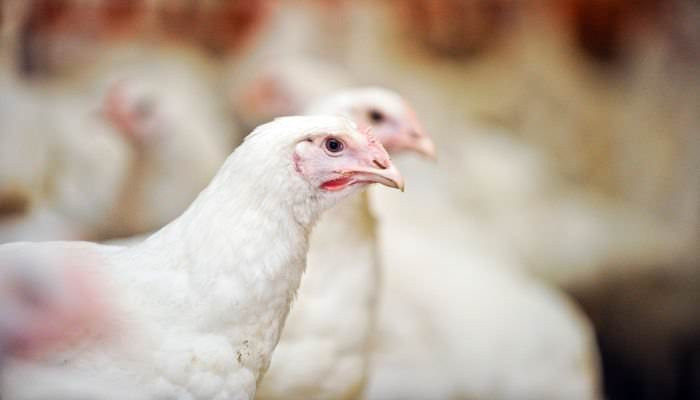
In Europe, 8.3 billion chickens that are fattened and slaughtered every year. Since there is little prospect of significantly reducing the number of broiler chickens through campaigns designed to persuade consumers to change their behaviors, we see it as our duty to reduce the suffering of these animals as far as we possibly can. This is why we developed the European Chicken Commitment together with animal welfare and animal rights organisations from all over Europe. Today, 37 organizations are involved in the initiative. Together we approach food companies to persuade them to meet the criteria of the Commitment. These criteria aim to address the areas that contribute most significantly to the enormous suffering in the poultry fattening industry and outline a series of demands on companies in the food industry.
in which we investigate chicken welfare within the German food industry.
Please note: Since 2024, companies have also been able to participate by meeting the criteria of level 3 of the German husbandry type label Haltungsform and a few additional criteria. We have since combined this German extra way with the ECC and labels that meet comparable requirements under the name Broiler Initiative (Masthuhn-Initiative). More information can be found on the German website of the Masthuhn-Initiative.
The European Chicken Commitment in detail
The criteria defined in the European Chicken Commitment are considerably more stringent than those required by animal welfare law and also the standards of the wide-spread German „Initiative Tierwohl“ (Animal Welfare Initiative), according to which a proportion of the meat sold in supermarkets and discounter chains is sold. The table below highlights the main differences:
| Standard in Germany | »Initiative Tierwohl« | European Chicken Commitment | |
|---|---|---|---|
| Stocking density | 39kg/m² (up to 26 animals/m²) | 35kg/m² (up to 23 animals/m²) | 30kg/m² (up to 20 animals/m²) |
| Access to free-range areas | No | No | No |
| Thinning | Unrestricted | Unrestricted | Max. 1 per flock |
| Restriction on overbreeding | No | No | Yes |
| Daylight | Partial, 20 Lux | Partial, 20 Lux | Yes, 50 Lux |
| Perches | No | No | 2m/1.000 Animals |
| Pecking substrates | No | One for approx. 3.000 animals | Two for 1.000 animals |
| Stunning without hanging birds upside down | No | No | Yes |
| Third-party audits | No | Yes | Yes |
Before we look at the details, the criteria defined in the European Chicken Commitment represent a major step in the right direction. Indeed, given the current level of research and knowledge in the fields of animal health and welfare, we could quite legitimately demand much more. However, the reality of the situation prevents us from demanding too much too soon. This is why we—in collaboration with other organizations—have developed a compromise that reflects what we believe is currently achievable.
Stocking density
Studies show that the stocking density would need to be reduced to 25 kg/m² in order to prevent certain types of illness and disease—such as painful inflammations—and to give the animals some freedom of movement. Our proposed limit of 30 kg/m² represents a step in the right direction and was determined by balancing cost and benefit considerations.
Access to free-range areas
Here, too, the Commitment represents a compromise: winter gardens and free-range areas require costly structural modifications and are rarely approved in practice. Since our aim is to establish our demands as a new minimum standard, we cannot require access to free-range areas at this stage.
Thinning
Thinning refers to the practice of removing a proportion of chickens from a shed for slaughter earlier than the rest. This causes considerable stress both for the birds that are removed and for those that remain. The method is used to increase the number of animals that can be raised in a shed. While the European Chicken Commitment calls for an end to thinning, it still permits it once per fattening cycle.
Overbreeding
We consider the „hybrid lines“ used in standard poultry production (including under the „Initiative Tierwohl“) to constitute a form of torture breeding. The animals grow so rapidly that their skeletons and internal organs are placed under extreme strain. In addition, they are bred to develop such large breast muscles that many can no longer maintain their balance. The European Chicken Commitment prohibits this. However, hybrid lines used for fattening may result from crossing animals from intensive and less intensive breeding systems, meaning that the Commitment cannot fully eliminate the risk of torture breeding in parent animals.
Daylight
Sheds approved prior to 2009 are not required to provide the animals with any daylight. Although more recently constructed sheds are required to have windows, in reality only very little daylight actually enters the sheds. Consider the following comparison: the standard 20 lux is roughly equivalent to moonlight, while the 50 lux demanded in the European Chicken Commitment offers at least as much light required for, say, a person to read a newspaper. This is relevant because chickens are unable to practice their normal behavioral repertoire at less than 50 lux.
Perches, pecking substrates and air quality
Chickens prefer to perch at elevated positions, and pecking is one of their basic behavioral needs. Under the conditions required by the European Chicken Commitment, animals are at least able to perform these behaviors to some extent. Air quality is also crucial, as elevated concentrations of harmful gases (such as ammonia) can cause significant suffering.
Stunning and slaughter
Current legal standards and the „Initiative Tierwohl“ permit electrical waterbath stunning. In this process, chickens are hung upside down by their legs in shackles, which often leads to broken bones and other injuries. Their heads are then immersed in an electrified waterbath intended to induce unconsciousness. However, insufficient stunning is a frequent problem with this method. The European Chicken Commitment calls for an end to shackling birds upside down and significantly reduces the risk of ineffective stunning. The most common alternative—two-stage CO₂ stunning—is less problematic but still causes pain and stress.
Audits
We call for annual audits to be conducted by an independent third party.
Timeframe
Companies will complete the transition between 2026 and 2030—or earlier in some cases. If the transition takes place after 2026, a roadmap must be developed.